Looking for something else?
Try one of these!
Carp Hydra Fly Step-by-Step:
If I’m being honest, I spent an inordinate amount of time focusing on Carp thus far in 2024. After failing to land a single carp in 2023, I made the species a point of emphasis in 2024 and recorded a carp as my first catch of the year on New Year’s Day.
Feeling vindicated after that catch, my focus likely would have waned if not for an invitation to fish a new tournament, The Dirty Carp, later that spring. A small field tournament featuring some amazing prizes, the prospect of impending competition was enough to ensure carp remained a focal point of my spring fishing throughout 2024.
Returning to the canals of urban and suburban New Orleans throughout the spring, I found myself consistently landing 6-10 fish a trip as I utilized a variety of patterns from Clouser’s Swimming Nymph and Corn Flies (laugh if you must) to Backstabbers and Carp Bitters. All ideal damselfly and dragonfly mimics (corn fly excluded), these flies excelled when targeting cruising fish in “clean” water.
When faced with “mudding fish,” however, these patterns often failed to produce. Face down in the mud, water clouded, these fish were hunting by taste and feel, not sight. As such, the pulsating movement imparted by the predominant materials in the above patterns were rendered ineffective.
What I really needed in these situations was a pattern the fish would “Feel” even if they couldn’t see it.
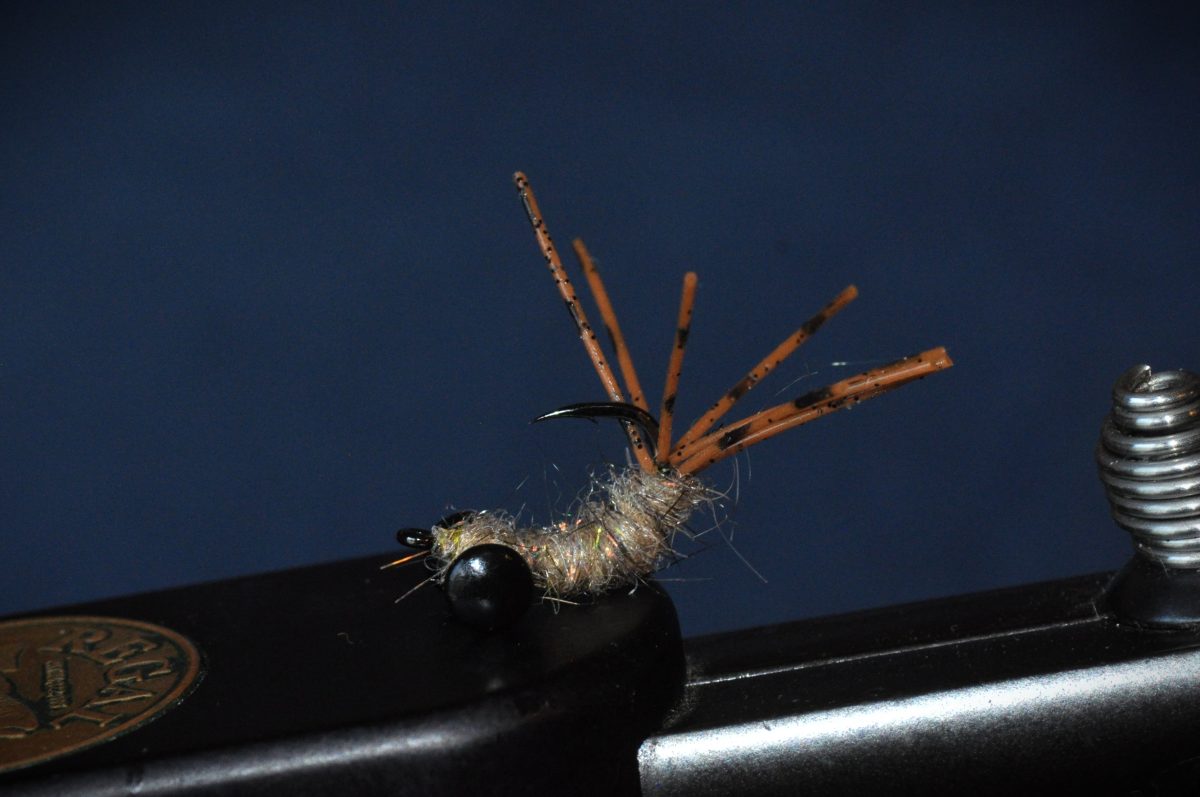
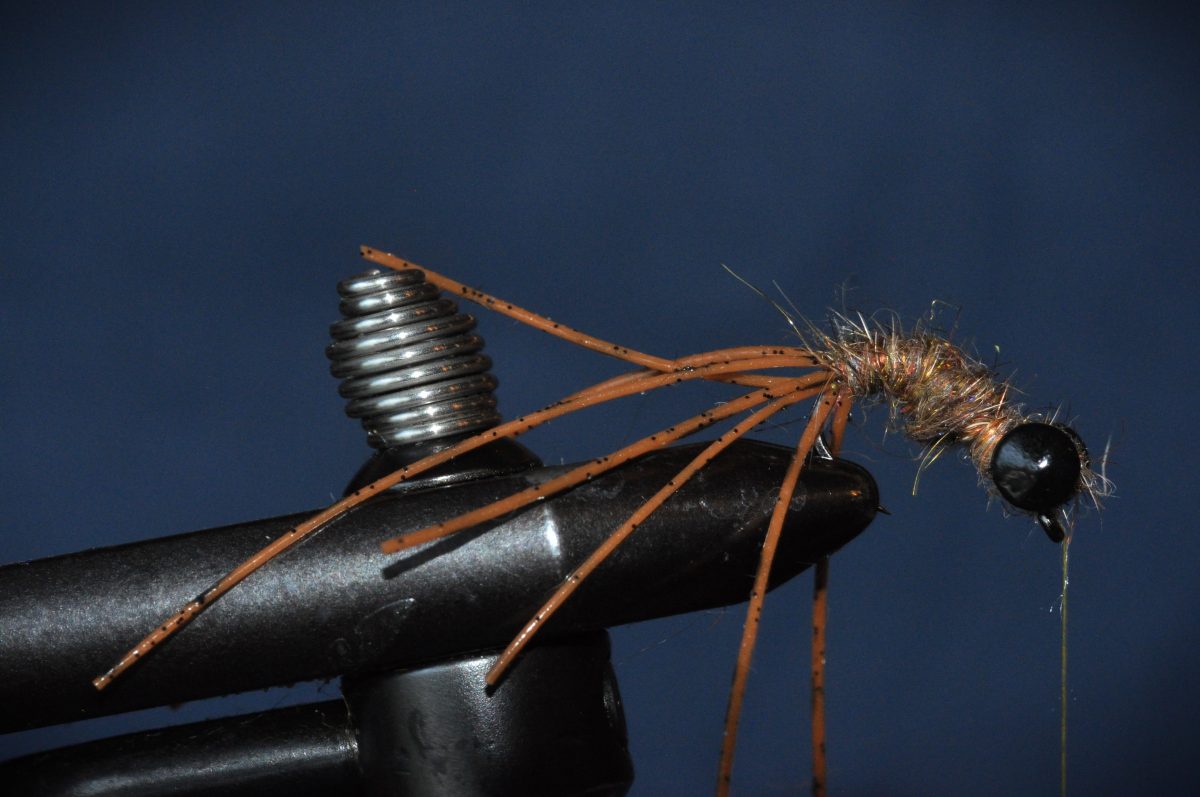
Focusing on function over form, I tied a pair of medium dumbell eyes to Gamakatsu C14S glo bug hook, tied in varying lengths and combinations of rubber legs extending from the bend of the hook and dubbed a simple drab body. After a half dozen iterations or so, I settled on a general look and began field testing.
Often invisible to the mudding fish it was designed to target, the pattern relies on the elasticity of the round rubber legs. Creating faint resistance and springy movement, the hope is that the fish will register what it feels as fleeing prey.
Standing on its head in the soft sediment with rubber legs extending above the dubbed shank, it is reminiscent of its namesake, the microscopic Hydra.
| Materials: | ||
|---|---|---|
 Gamakatsu C14S (#6) Gamakatsu C14S (#6) |  140-Denier (Tan/Brown) 140-Denier (Tan/Brown) |  Dumbbell Eyes (Black; Lrg or Med) Dumbbell Eyes (Black; Lrg or Med) |
 Round Rubber Legs (Tan/Brown/Rust) Round Rubber Legs (Tan/Brown/Rust) |  SLF Dubbing (Damsel Tan) SLF Dubbing (Damsel Tan) |
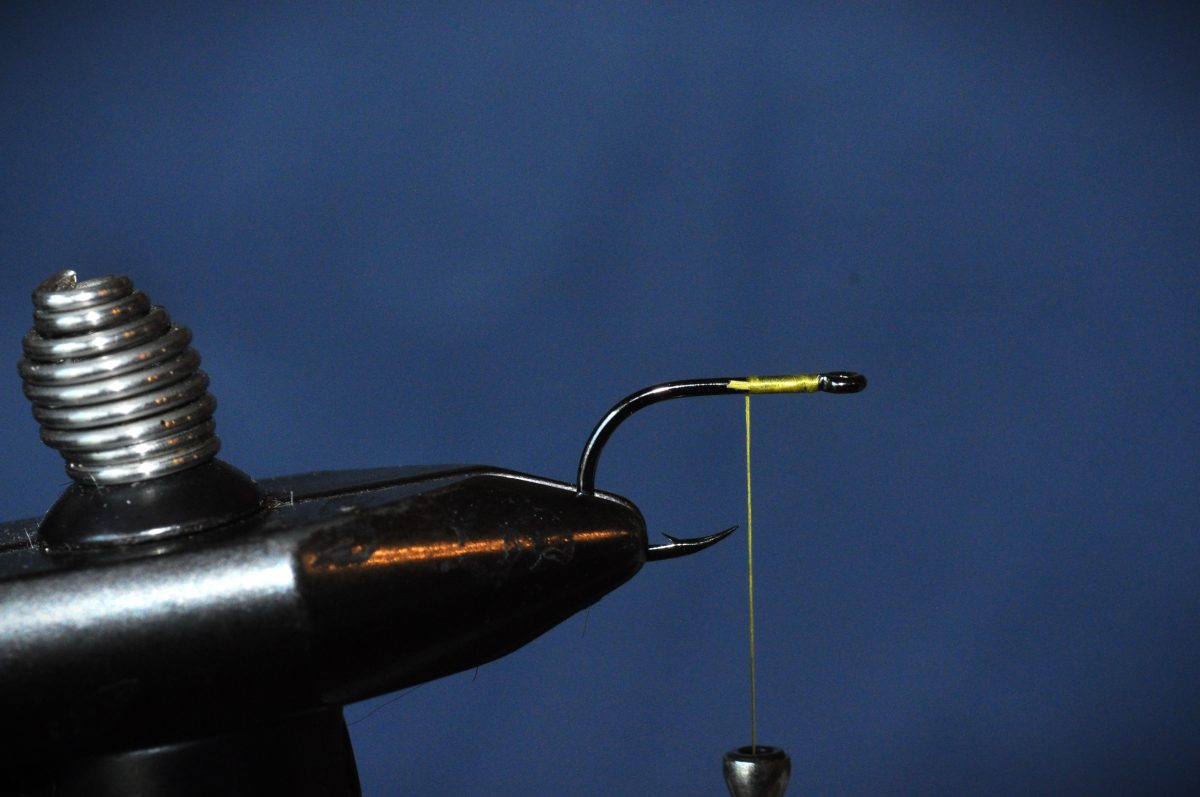
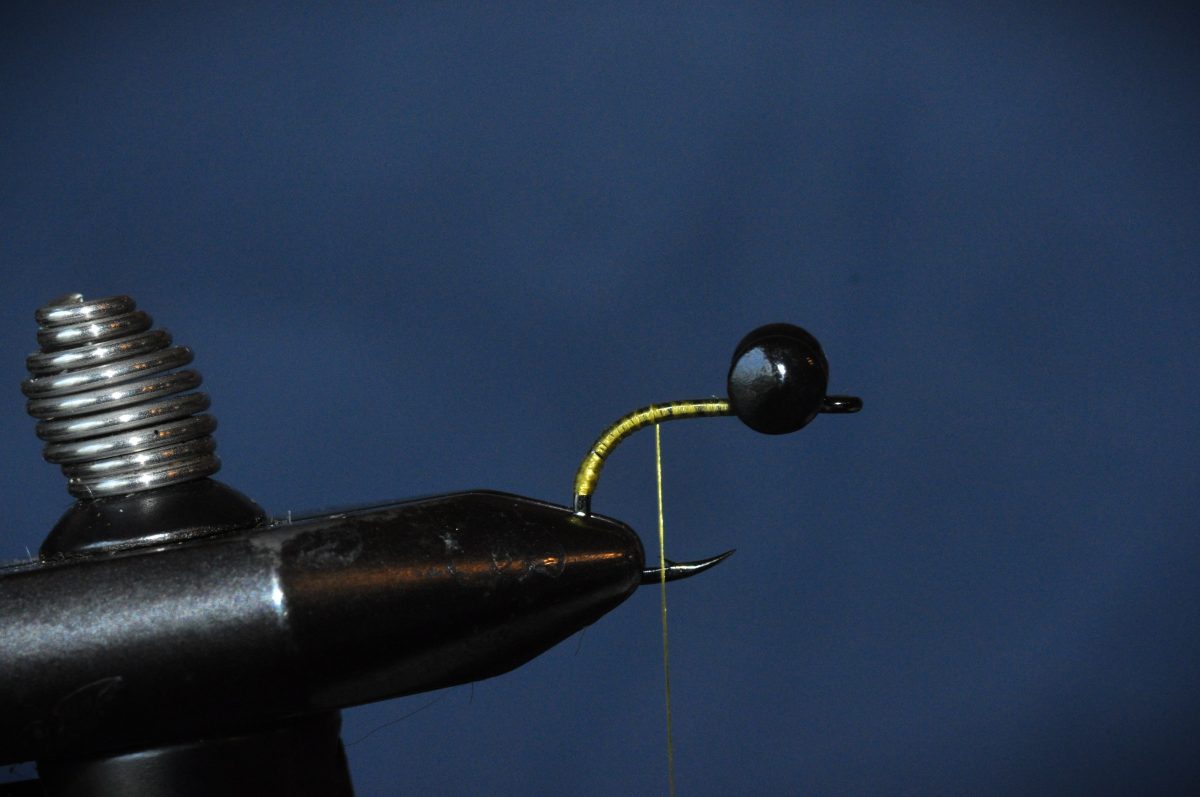
Carp Hydra Fly Step-by-Step Tying Instructions:
(Mobile Viewers: Click images to enlarge or rotate phone to landscape)
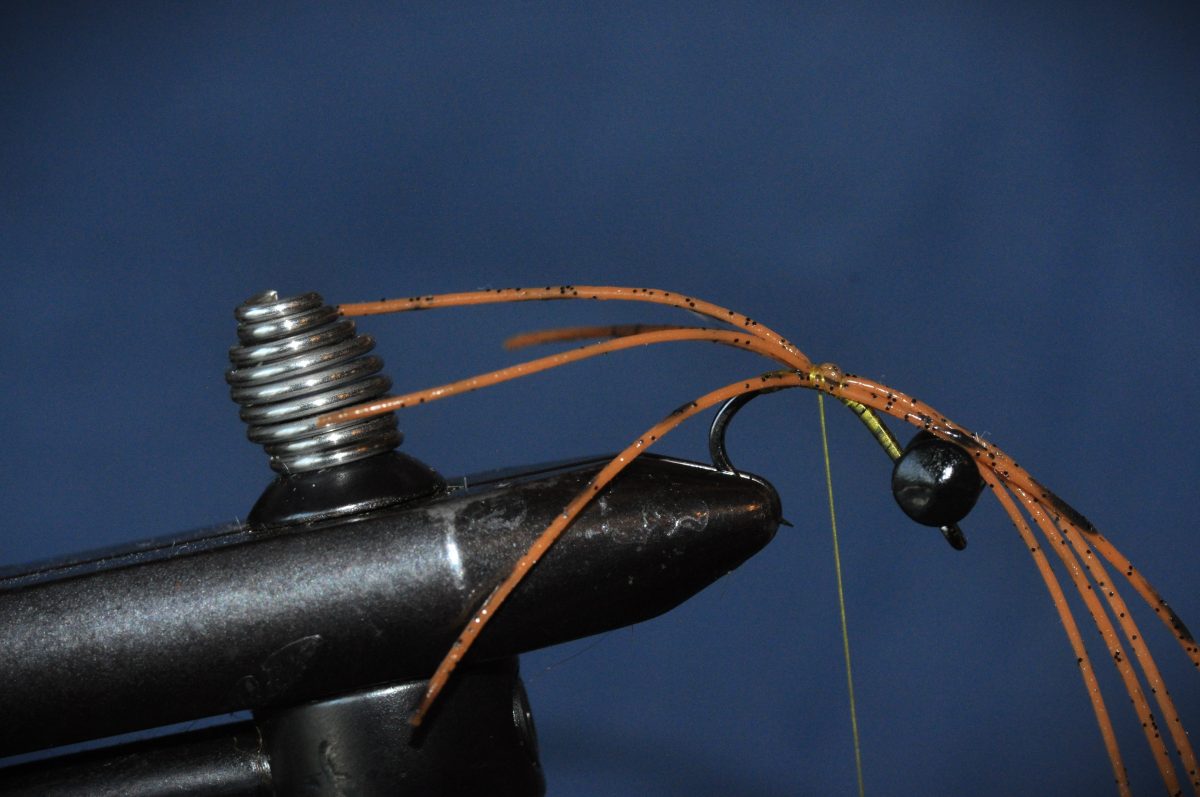
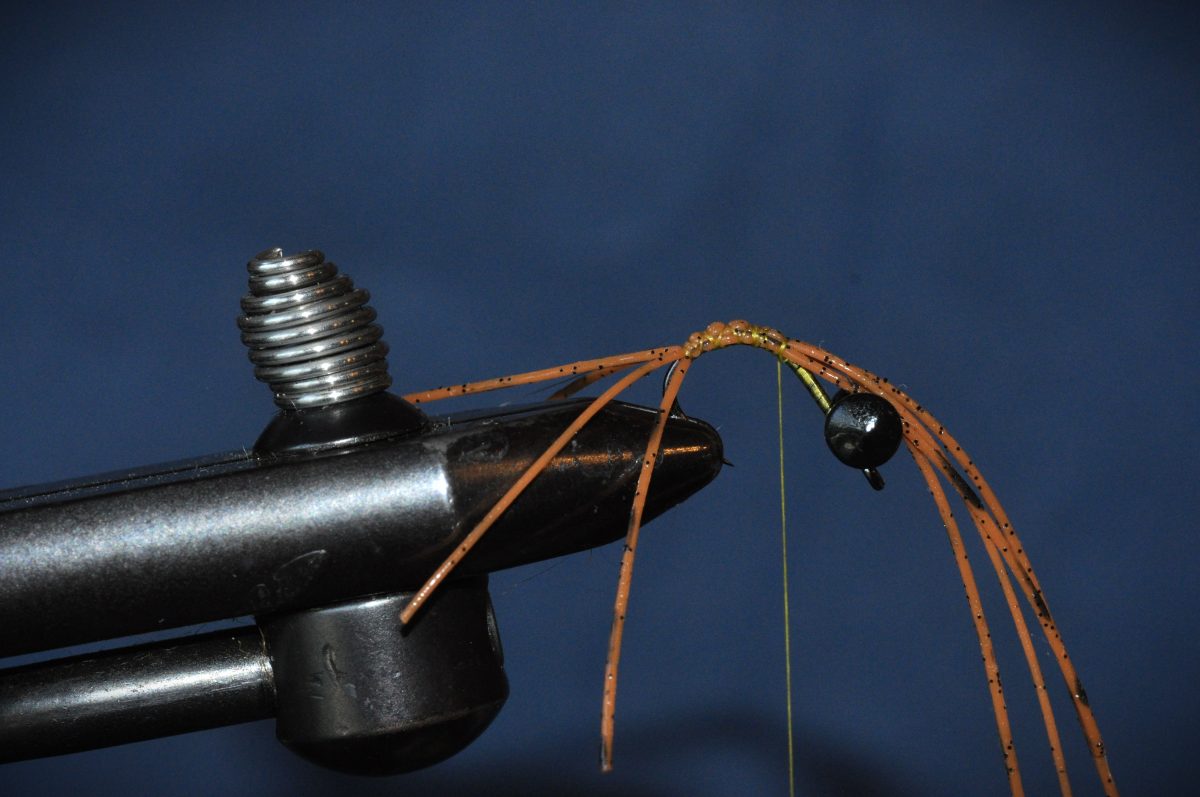
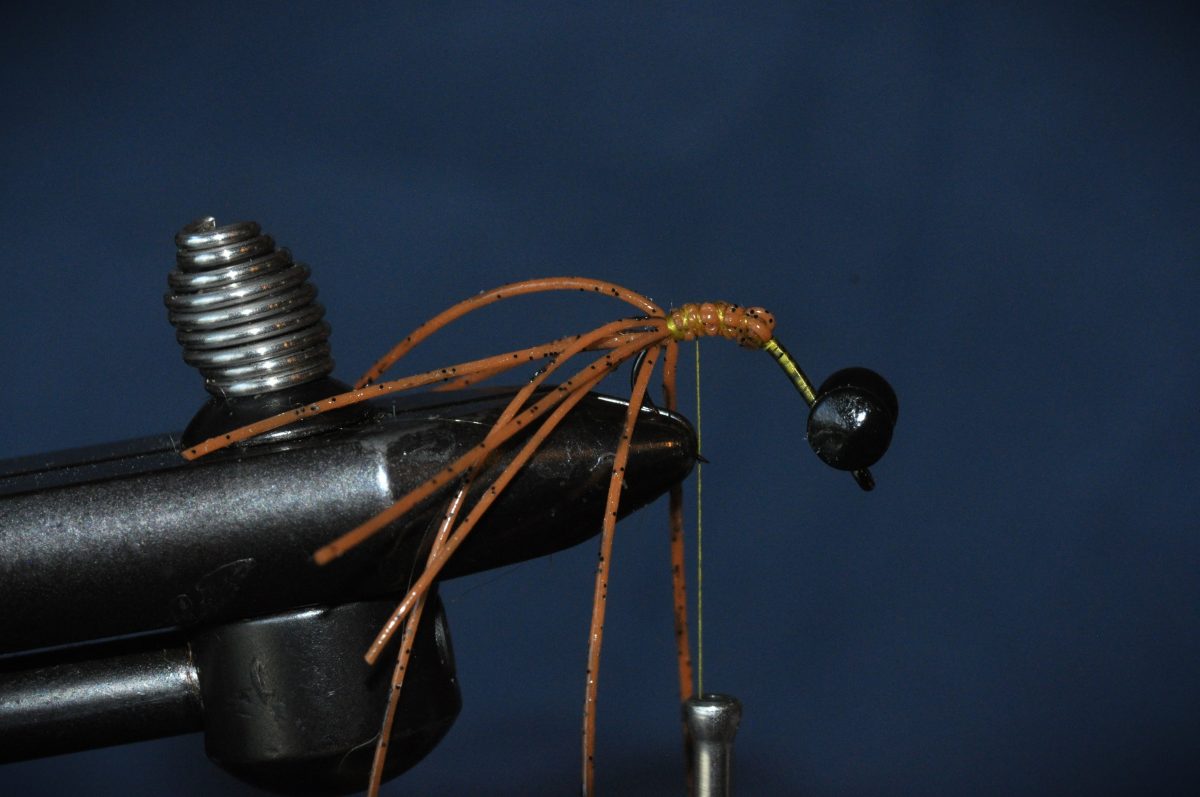
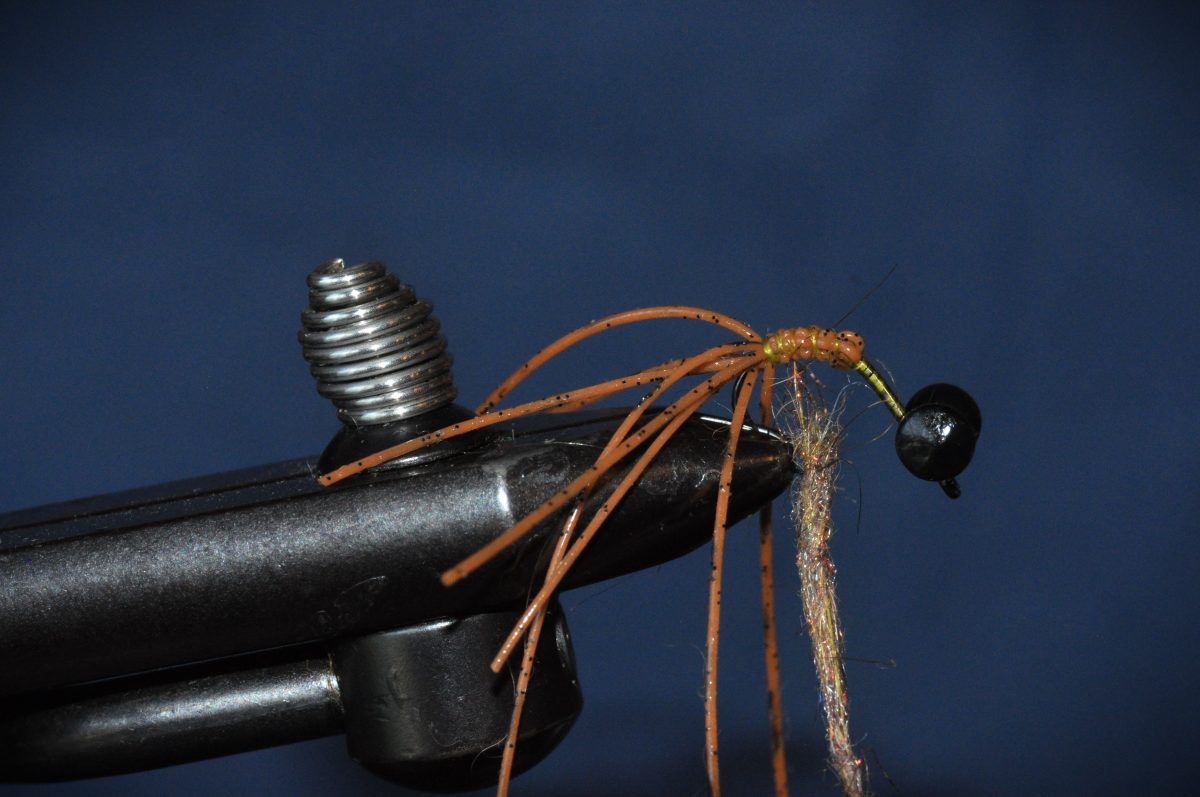
Tips and Tricks
- Color Selection – Given how I framed this fly above, you might think that color doesn’t matter. And, the truth is, it doesn’t in the vast majority of cases. That said, there are always exceptions and having a variety of colors available (as with any carp pattern) could make or break your day. In the case, of this pattern, I’d recommend black and chartreuse as alternatives. Both are highly visible in specific situations and could result in strikes from sight feeding fish should conditions allow.
- Loooong leaders – Drag and drop carp fishing can be a bit of a guessing game. You often cannot see if/when the fish takes the fly and must rely on line movement to determine when you should set the hook. When targeting carp in such a manner, I will often utilize the carp fishing equivalent of a mono rig. For me this equates to a long enough section of leader and tippet (usually 20+’) to keep my fly line inside my rod tip. By doing so I maintain a straight line connection to my fly and avoid the sag caused by the weight of the fly line. As a result, I have a much better feel for what is going on beneath the surface and can sense delicate takes that might otherwise be missed.
- Adhesive & Carp Flies – I know I’ve said this before, but here’s another friendly reminder regarding adhesives and carp flies…At least among fish, carp have a renowned sense of smell. While that doesn’t stop everyone from using super glue, flex seal or Zap-a-Gap in their fly design, it is enough to give me pause. Personally, I’d rather catch a few fish before my fly falls apart as opposed to not catching any fish due to the smell of my fly. This isn’t to say you can’t use these adhesives and fixing agents on your fly, just keep in mind that they may be the problem if carp keep refusing your offerings.
Proof of Concept
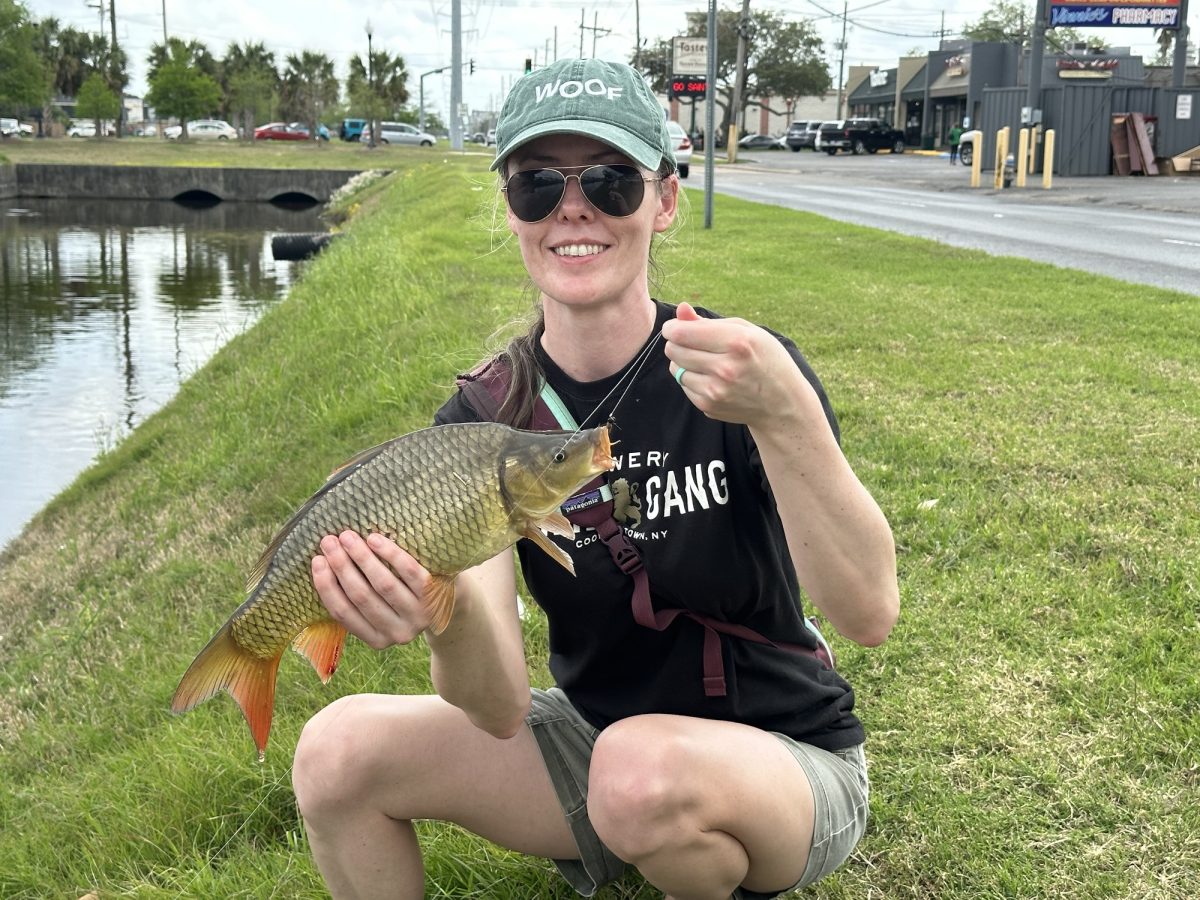
While all black patterns proved the key to our success during the aforementioned Dirty Carp tournament, the Hydra produced on countless scouting trips throughout the spring. The fish featured on the right was my wife’s first carp on the fly and came during a quick pre-brunch detour on Easter morning. Credit to her for catching the fish and being the kind of partner willing who is willing to allow me a ditch fishing detour on the way to brunch.
Tight Line!
Chris
Species Caught on the Carp Hydra to Date:
- Common Carp
- Largemouth Bass
Enjoy our Content?
Subscribe below to be notified anytime a new Step-by-Step is added.
Support our Content
Enjoy our content & want to help support our work? Consider clicking one of the Ads below the article if something catches your attention. Each click brings in a small bit of revenue to help offset the cost of maintaining & hosting this great site!
Good article. I particularly like your tip of using an extra long leader. Thanks for sharing your pattern and especially your experience. How long do you recon adhesive odor stays on a fly?
Thanks, Kirk. To be honest, I’ve never attempted to field test the adhesive odor theory. It’s quite possible that it wouldn’t even matter in a system as urban and polluted as the Metairie canals. I’m sure those fish are exposed to all sorts of chemical scents throughout their daily lives.