
Looking for something else?
Try one of these!
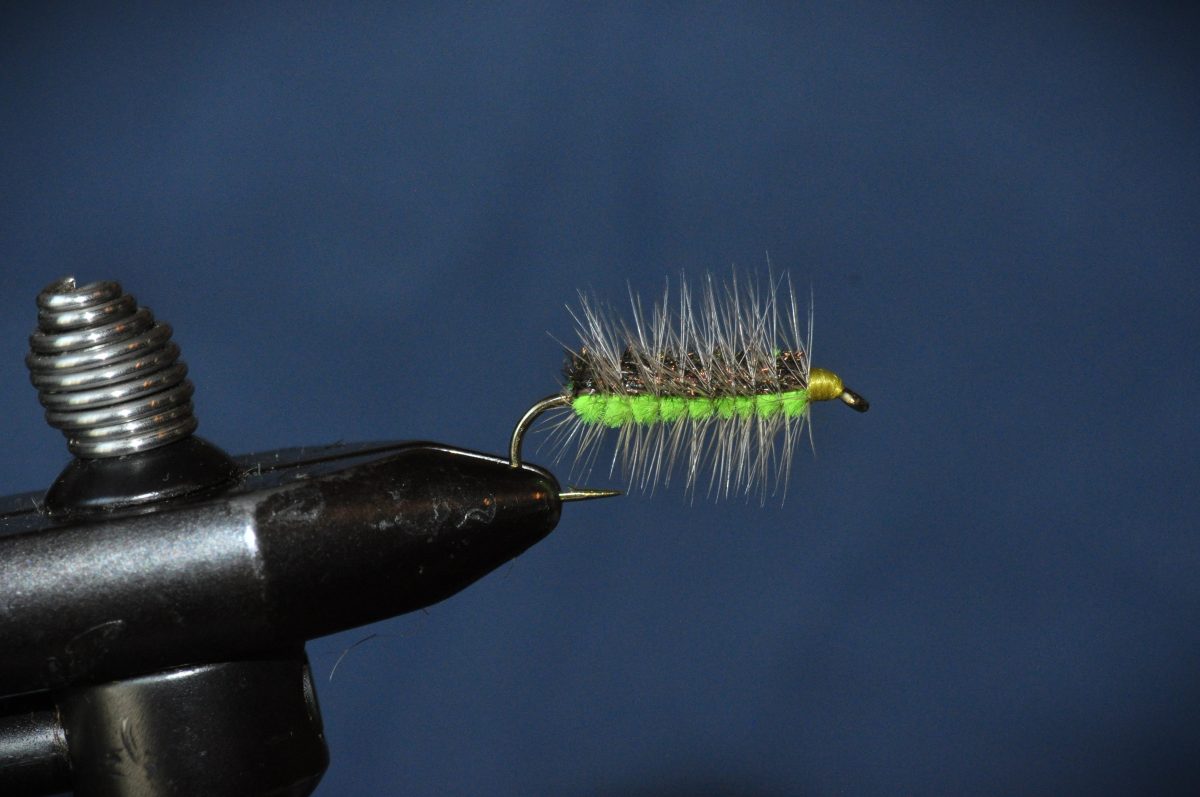
Caterpillar Dry Fly Step-by-Step:
As the world shut down in the spring of 2020, I found myself spending a significant amount of time exploring local waterways in my kayak. While my angling efforts at the time were focused on the subsurface (often working fluff butts in and around cypress knees), it was not uncommon to see fish rise to the abundant tent caterpillars as they fell from overhanging branches.
I made a mental note at the time to research caterpillar patterns, but I quickly forgot as I shifted my focus to the marsh in the months that followed. And, were it not for tent caterpillars taking up residence in my backyard earlier this year, it likely would not have crossed my mind again.
After a bit of research, I settled on the style shown below for my first attempt. While I do not if there is an official name for this pattern, countless derivations of this pattern can be found across the internet.
| Materials: | ||
|---|---|---|
 Streamer Hook (4XL; #8-10) Streamer Hook (4XL; #8-10) |  70 Denier (yellow/brown) 70 Denier (yellow/brown) |  Ultra Chenille (Med.; Yellow/Chartreuse) Ultra Chenille (Med.; Yellow/Chartreuse) |
 Peacock Herl Peacock Herl |  Dry Fly Hackle (Dun/Grizzly) Dry Fly Hackle (Dun/Grizzly) |
Disclosure: This post contains affiliate links. A small commission may be paid for purchases made through these links.
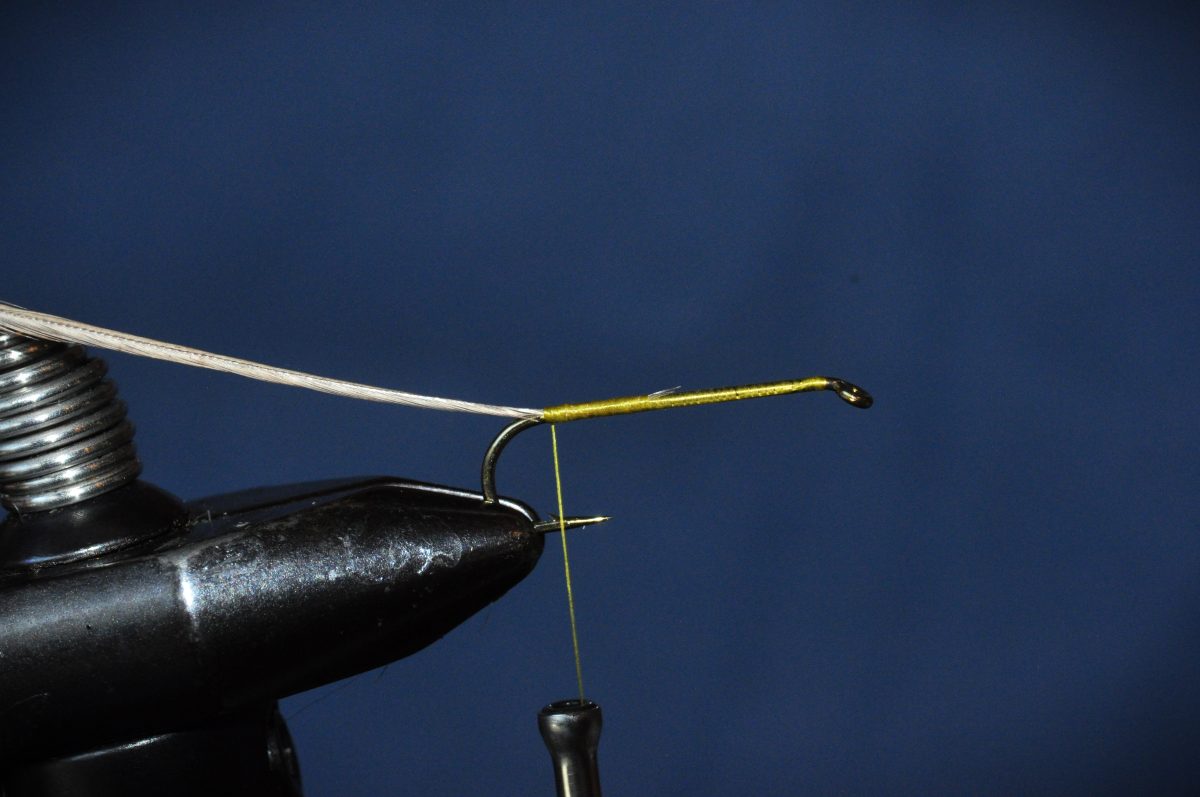
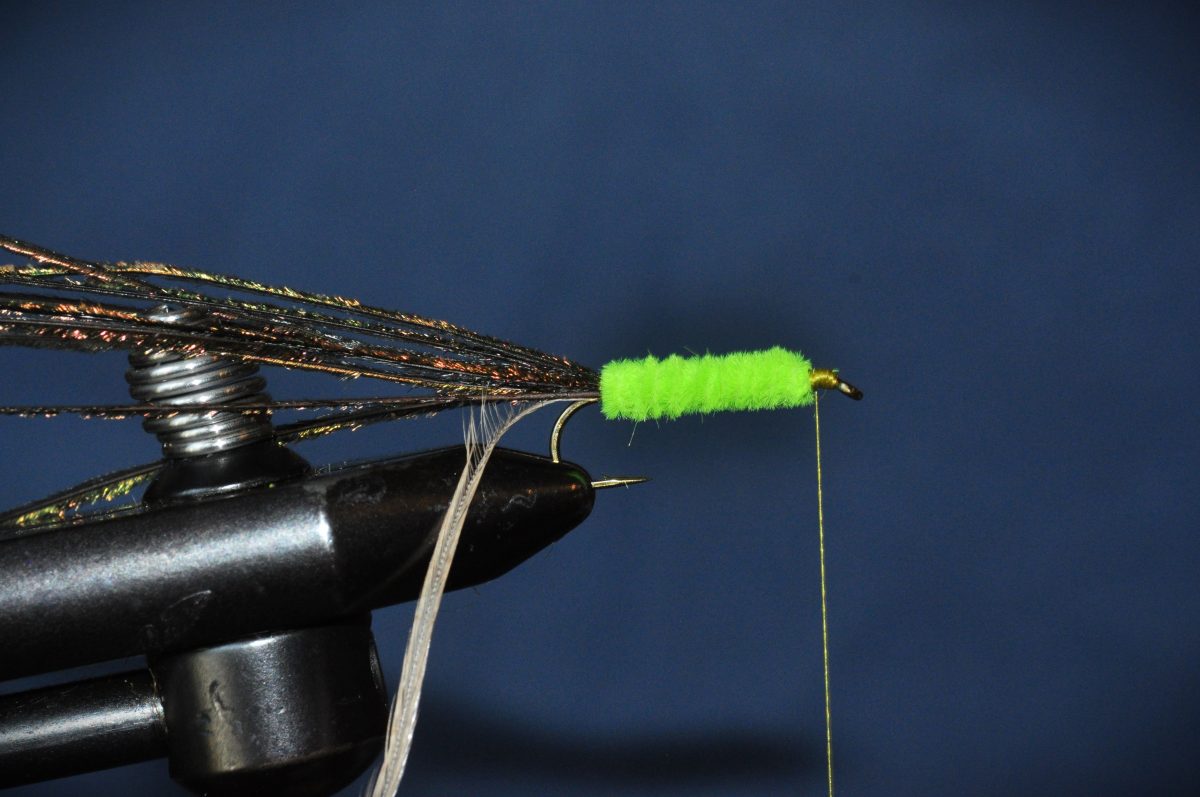
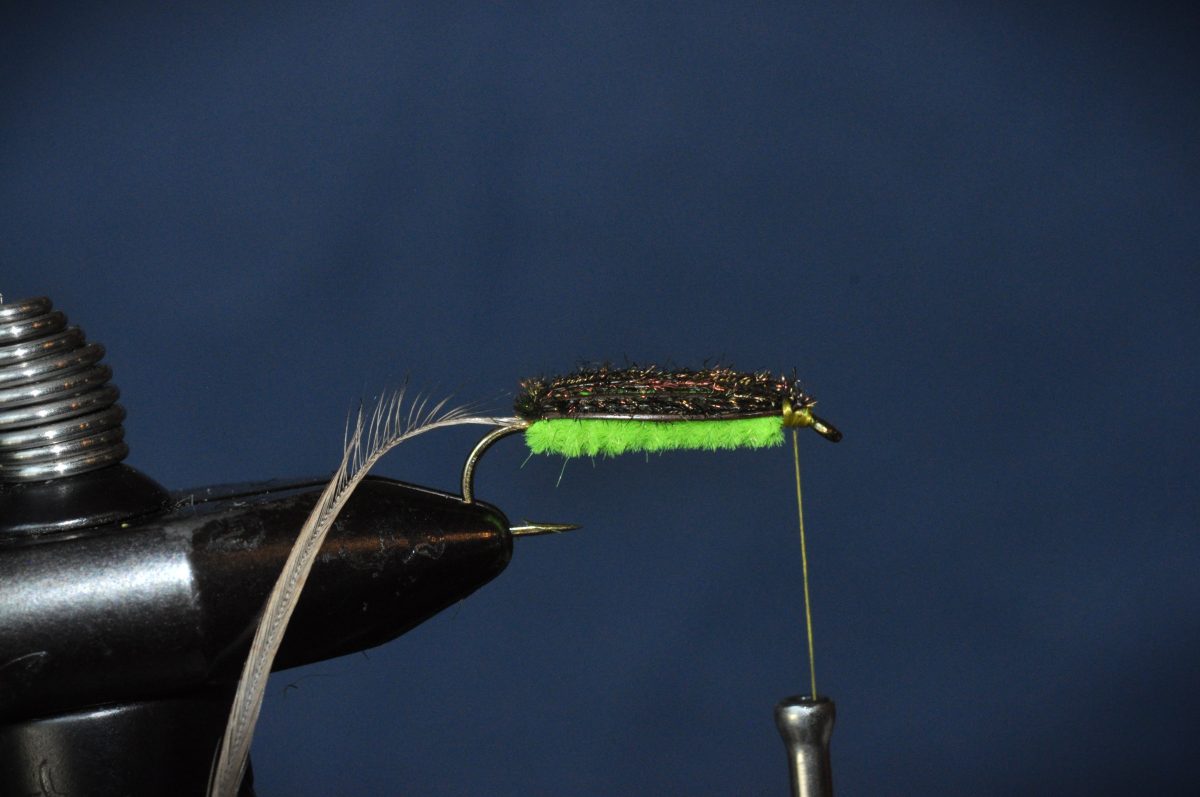
Caterpillar Dry Fly Step-by-Step Tying Instructions:
(Mobile Viewers: Click images to enlarge or rotate phone to landscape)



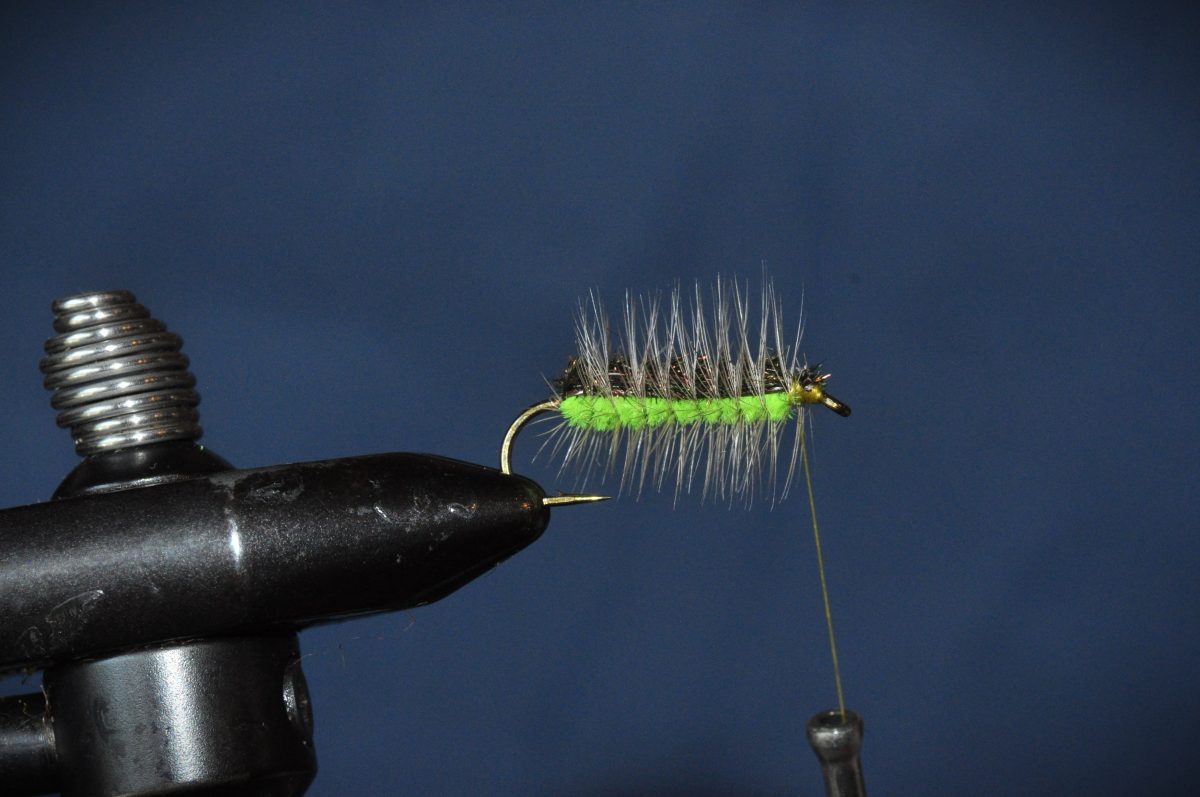
Tips and Tricks
- In the Film – When exploring caterpillar fly patterns, I came across numerous patterns tied with foam. While these patterns look great, I have my concerns that they float too high in the water column. Natural caterpillars in contrast sit in the film and are better imitated by a pattern that rides similarly low in the surface film. The pattern above certainly accomplishes that. However, it is also at risk of sinking as the chenille absorbs water. With that in mind, it may be worth adding a few drops of Gink or similar floatant to the top of this fly. That should allow the pattern to be fished low in the film without immediately sinking.
- Color Selection – While I settled on chartreuse in the example above, more neutral tones may be advisable depending on your local caterpillar species. Keep that in mind when tying up a batch of these flies for your springtime panfish box.
- Active Retrieve? – Next time you see caterpillars on the water watch how they move. In my experience they tend to alternate between a dead drift and actively “Squirming” on the surface. With that in mind, limit yourself to only the occasional twitch or series of twitches when fishing this pattern.
Proof of Concept
As luck would unfortunately have it, Hurricane Francine decimated the tent caterpillars behind my home before I had the opportunity to test this patterns effectiveness. As a result, I’ll likely have to wait until spring before finally proving out this pattern.
Tight Line!
Chris
Species Caught on the Caterpillar Dry Fly to Date:
Enjoy our Content?
Subscribe below to be notified anytime a new Step-by-Step is added.
Support our Content
Enjoy our content & want to help support our work? Consider clicking one of the Ads below the article if something catches your attention. Each click brings in a small bit of revenue to help offset the cost of maintaining & hosting this great site!
Looks very interesting. However, note that the materials in the boxes don’t seem to match up with what is used in the tying steps.
Thanks, Darrell! Not sure what happened there. I had updated the material list prior to writing the proof of concept, but it looks like WP decided not to save. It has been updated now.
I like this pattern a lot. This should be killer in the spring
Thanks, Doc.
I plan to tie up a few variations on this and test it out on the Blind River next March/April. There are always a ton of caterpillars falling from the trees over there.